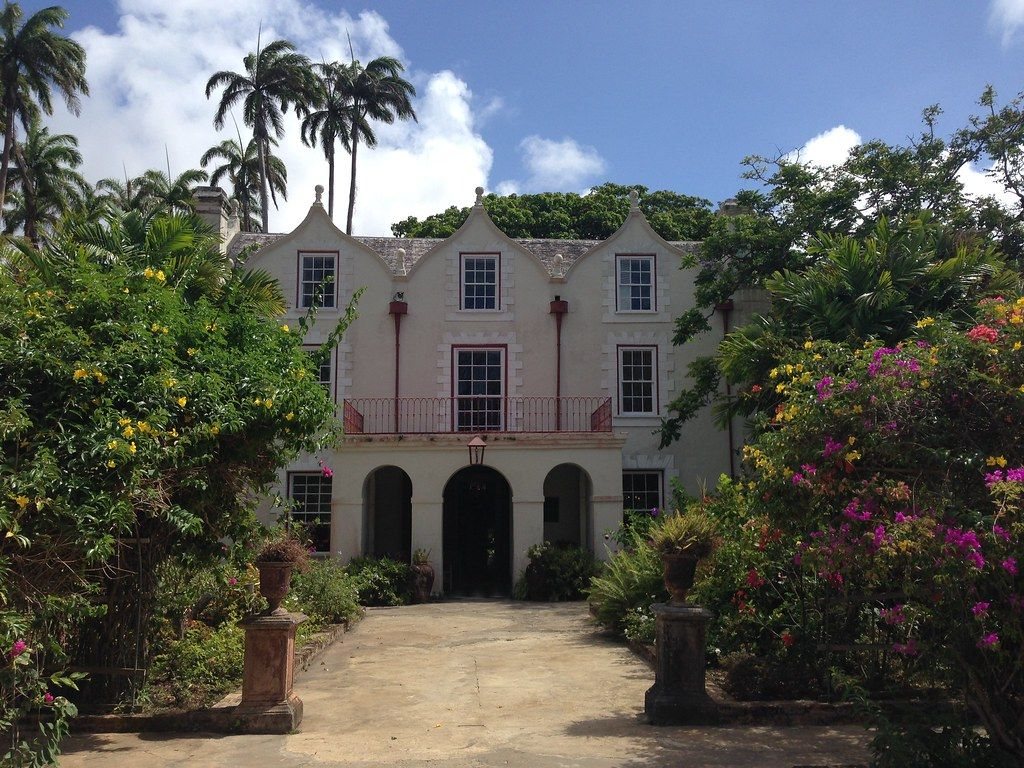
The great houses of Barbados are handsome coral-stone buildings, and every one of them stands on sugar grown and cut by enslaved Africans. You see both when you visit.
| Parish | St Peter, St Philip |
|---|---|
| Best for | History |
| When | December to April, mornings |
| Getting there | Car or bus, then a short walk |
| Bring | Cash, water, light layers, respect in old rooms |
Drive through the middle of Barbados and you pass cane fields, windmill towers without sails and, now and then, a long avenue of mahogany or palms that ends at a stone house on a rise. These are the plantation great houses. Some are museums, some are still family homes, and some are ruins in the grass. All of them belong to the same story, and it is worth knowing it before you walk through a front door.
Sugar, and the people forced to grow it
English settlers arrived in 1627 and tried tobacco and cotton first. In the 1640s they turned to sugar, and within a few decades the island was one of the richest colonies in the English-speaking world. That wealth was produced by enslaved Africans, brought across the Atlantic in great numbers and forced to clear the land, plant and cut the cane, and boil it in the factory yards. The work was brutal, and the death rate was high.
The great houses were the planters' homes and the centre of each estate. Near them stood the mill, the boiling house, the curing house and, at a distance, the rows of huts where the enslaved workers lived. Most of those huts are gone. The houses survived because they were built of stone and because the families who owned them had the money to keep them.
In 1816 enslaved people in the south-east rose in the revolt now linked to the name Bussa, and it was put down hard. Slavery was abolished across the British Empire in 1834, but a system called apprenticeship tied former slaves to the estates for four more years. Full emancipation came in 1838. When you look at a fine staircase or a polished floor in one of these houses, you are looking at that history.
What the houses look like
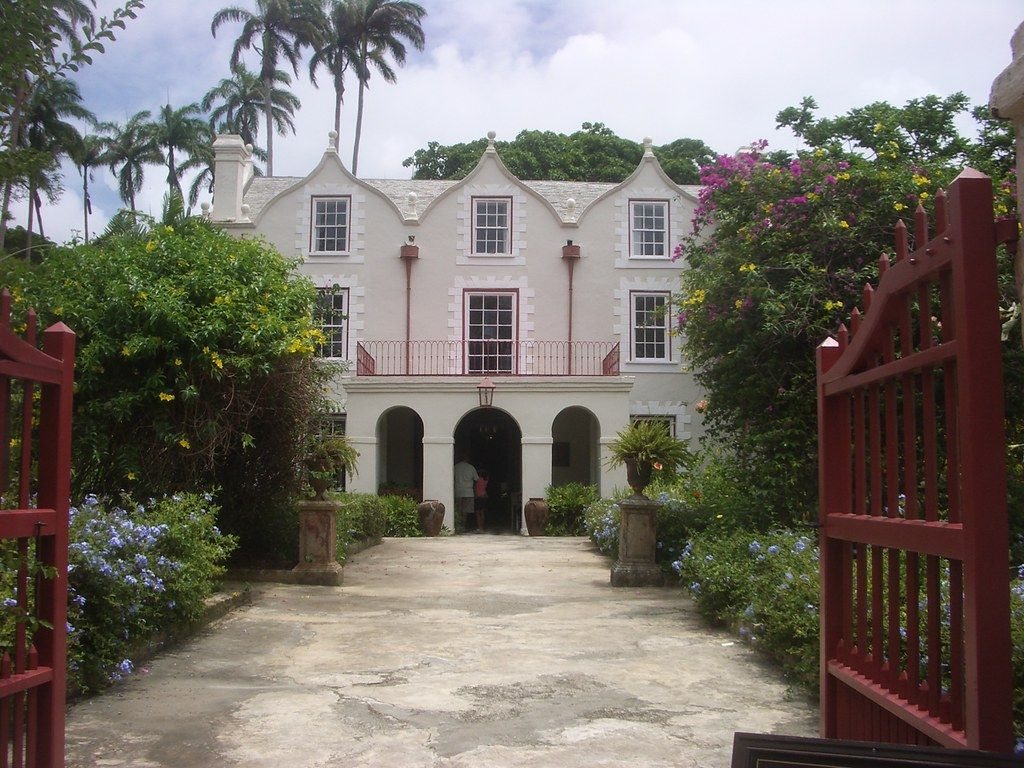
Most great houses are built of the island's own coral limestone, cut into blocks and often rendered and painted. You notice thick walls, tall windows with shutters, wide verandas and roofs shaped to shed heavy rain and to stand up to hurricanes. The style of building is covered in more detail in the note on coral stone and chattel houses, because the same stone runs from the grandest house to the smallest wall by the road.
St Nicholas Abbey in St Peter is the house people ask about most. It dates from the middle of the seventeenth century and has curved Dutch gables, corner chimneys and a layout that is very rare in the Americas. It was never an abbey; the name came later. The grounds hold an avenue of trees, old gardens and a working mill area.
Another noteSt John, the parish on the cliffSunbury Plantation House in St Philip, in the south-east, is lower and broader. It is known for rooms filled with old furniture, prints and household objects, and for the cellars and outbuildings around it. It was badly damaged by fire in the 1990s and restored, so some of what you see is careful rebuilding.
Visiting a heritage house
Opening days, hours and entry fees change, and some houses open only for guided visits at set times. Photography rules differ from house to house, so ask at the door.
- Wear shoes you can walk in; paths and steps are uneven.
- Carry water; inland estates can be hot and still at midday.
- Barbados drives on the left, and estate roads are narrow and often unmarked.
- Pair a house with a church or a viewpoint nearby, such as the parish church in St John.
Some great houses are still private homes. The fact that a house appears on an old map does not mean it is open. Stay on public roads unless you know a place welcomes visitors.
Reading a house honestly
A good visit asks two questions at once: how was this built, and who built it. Heritage tours on the island now speak more openly about slavery than they once did, but the rooms you see were made for the planters. Look past the furniture to the yard, the mill tower and the distance between the house and where the workers lived.
The same history runs through the capital. In Bridgetown and the Garrison you find the buildings of the colonial government and the military that protected the sugar trade. On the east coast near Bathsheba the land falls away from the old estates to the sea. Seeing several of these places together gives you a clearer picture than any single house can.
Take your time, and leave room for what the guide does not say.