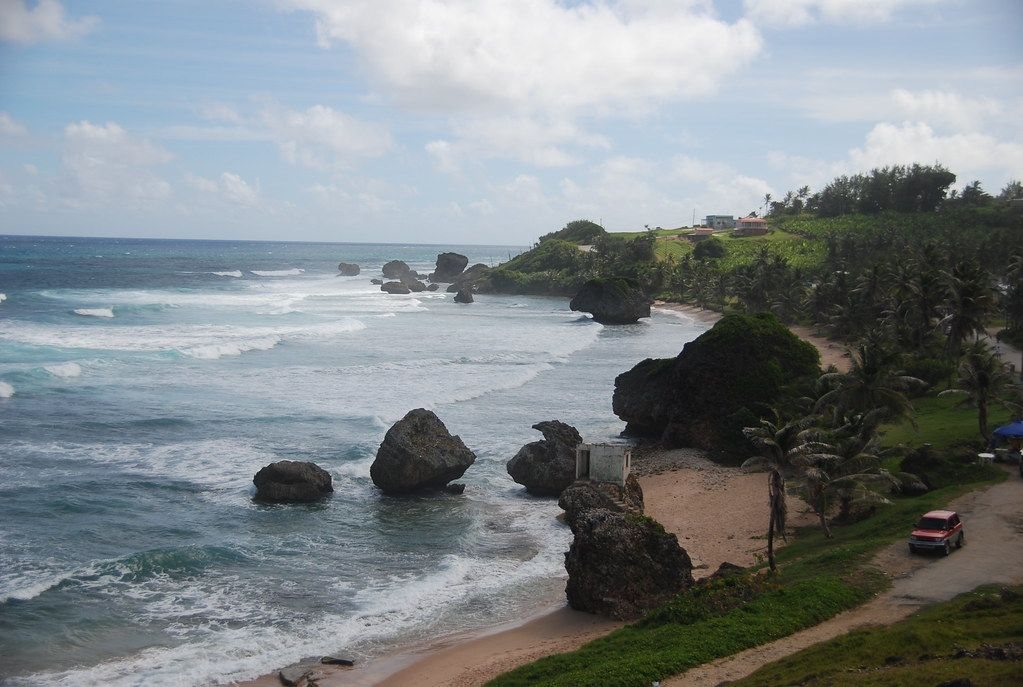
On the Atlantic side of Barbados the sea is loud, the rocks are huge and the light changes all day. You come to look and walk; swimming is often dangerous here.
| Parish | St Joseph |
|---|---|
| Best for | Coast |
| When | December to April |
| Getting there | Car or bus via St Joseph |
| Bring | Reef shoes, sun hat, water, a light jacket |
The east coast of Barbados feels like a different island from the calm west. Trade winds blow in off the Atlantic without a break, surf runs white over the reefs, and the hills come down steeply to the shore. Bathsheba, a small village in St Joseph, sits at the heart of this coast, and most visits start on its beach.
The mushroom rocks
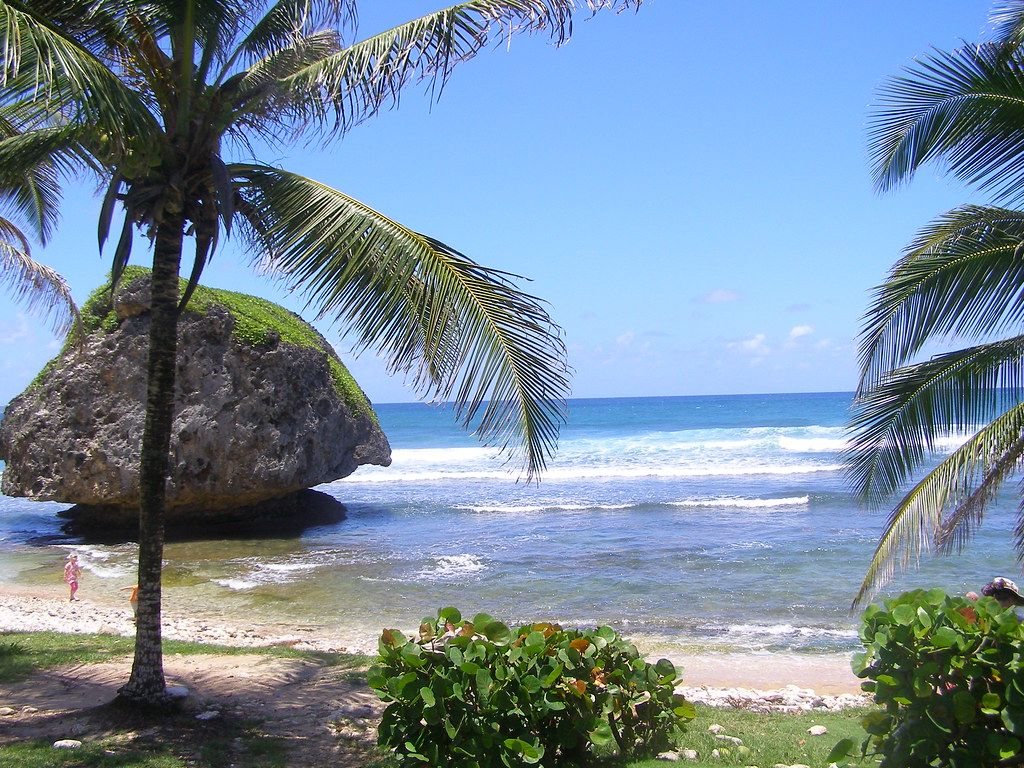
The first thing you notice is the boulders. Great blocks of coral limestone stand in the shallows and on the sand, many of them wider at the top than at the base. They broke away from the land long ago, and the waves have since worn their lower parts thinner, giving them their mushroom shape. Some carry tufts of grass and shrubs on top.
They are best seen at low tide, when you can walk between some of them on wet sand and look into the pools at their feet. Keep an eye on the water while you do: a wave can surge well up the beach without warning, and the rock underfoot is sharp and slippery. Reef shoes help.
Why you mostly do not swim
The Atlantic here is rough. Rip currents, sudden surges and a strong undertow make swimming dangerous on most days, and there are no lifeguards on much of this coast. Even strong swimmers get into trouble. Shallow pools form among the rocks at low tide, and you see people sitting in them, but treat even these with care and get out if the tide turns or the sea rises.
If you want to swim, go to the sheltered beaches of the west or south coast and come to the east to look, walk and listen to the sea.
The Soup Bowl
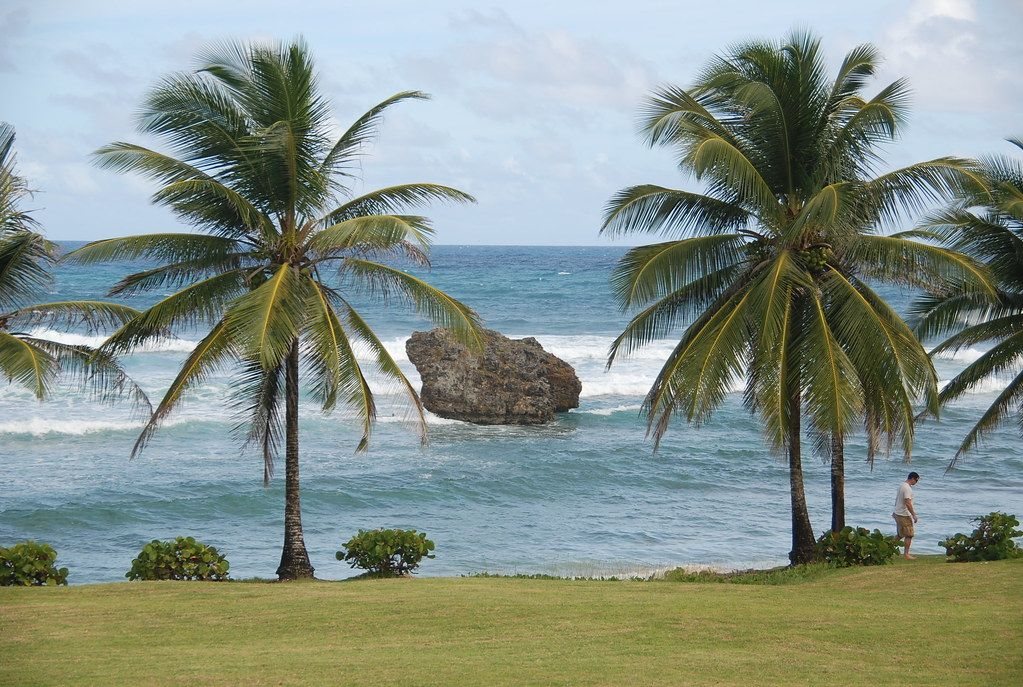
Just off Bathsheba is the Soup Bowl, a reef break known to surfers around the world. On a good swell it produces fast, powerful waves, and international contests have been held here. Watching from the shore is free and often the best part of a visit; the surfers sit far out, and you see the sets build long before they break.
The reef is shallow and sharp. Surfing here is for experienced people who know reef breaks. Conditions change with swell and wind.
Another noteSt John, the parish on the cliffThe old railway line and the gardens above
A railway once ran from Bridgetown across the island and up this coast, carrying sugar and passengers. It was never easy to run, landslips and sea damage kept closing it, and it shut in the 1930s. Parts of the old track bed now serve as walking paths along the shore, flat and easy, with the sea on one side and the cliffs on the other.
On the hillside above Bathsheba you find Andromeda Botanic Gardens, laid out over many years on a steep slope among limestone boulders. Paths wind past palms, orchids, heliconias and large old trees, with views down to the sea. It is a calm place after the noise of the shore.
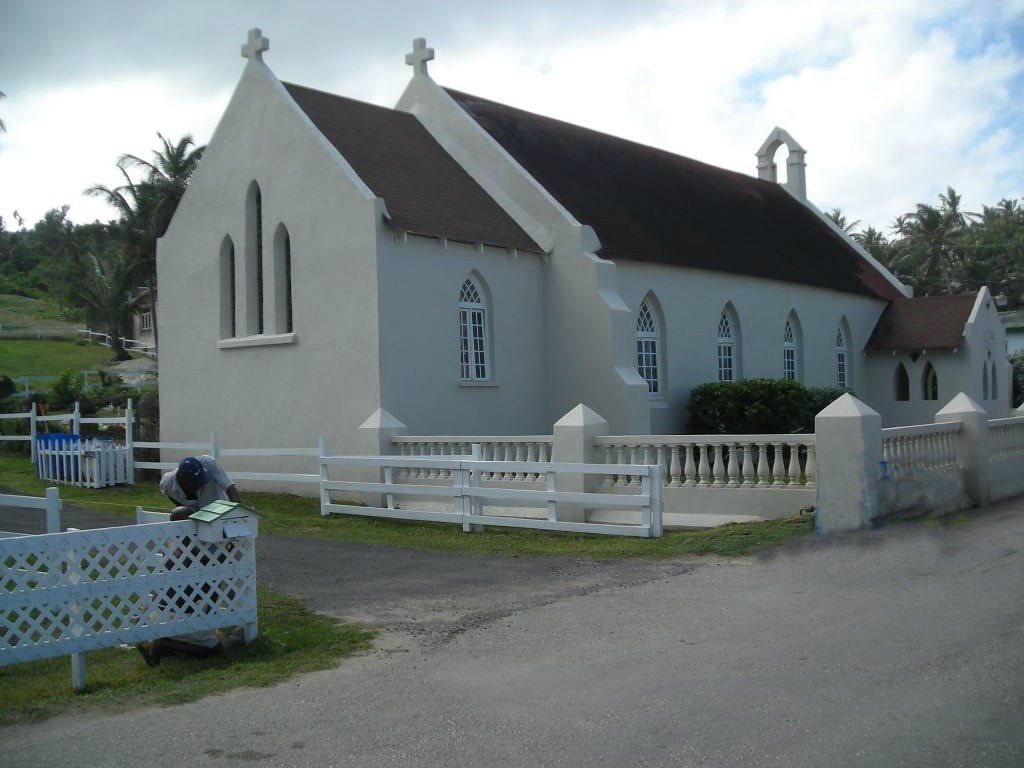
From here it is a short drive up to the cliff top in St John, the parish on the cliff, where you look back down over the whole coast. Small churches dot the hills along the way, built like most of the island from local coral stone.
Getting there and around
The east coast is reached by roads that wind down from the centre of the island. Barbados drives on the left, and these roads are steep and narrow with tight bends. Buses run to Bathsheba from Bridgetown but not very often, so plan your return trip.
- Bring a light jacket; the wind can feel cool even in the sun.
- Salt spray reaches cameras and phones; wipe them down afterwards.
- Combine the coast with a visit to the caves and gullies of the centre on the way back.
A day on this coast is about the sea itself: watch it, walk beside it and respect it.