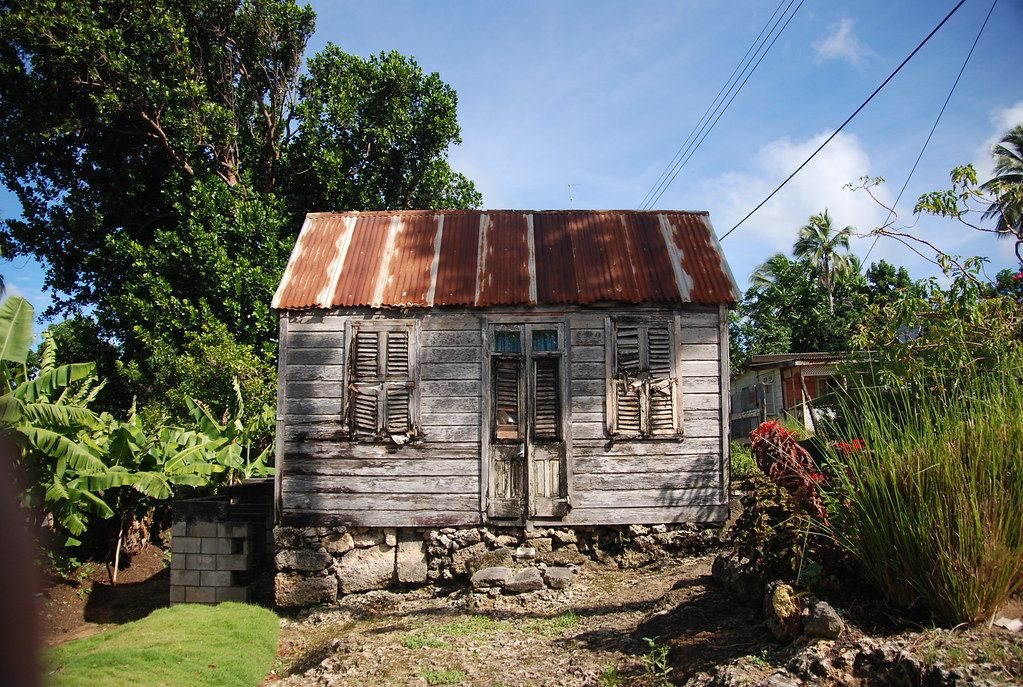
Most of Barbados stands on old coral reef, and much of it is built from that rock. Alongside the stone you find the chattel house, a small wooden home made to be moved.
| Parish | Across the island |
|---|---|
| Best for | Anyone |
| When | Any month, mornings best |
| Getting there | Any country road by car or bus |
| Bring | Camera, sun hat, a respectful distance |
Barbados is a coral island. Unlike its volcanic neighbours, most of it is capped by limestone built up from ancient reefs and lifted out of the sea over a very long time. That rock shapes almost everything you see: the soil, the caves, the cliffs and the buildings. Look closely at an old wall by the road and you can often make out fragments of coral and shell inside each block.
Building with the island's own stone
Coral limestone is soft when first cut, which made it easy to quarry and shape with hand saws and axes. Exposed to air, it slowly hardens. Builders cut it into blocks for walls, arches, gateposts and steps. Larger buildings were often rendered with lime plaster and painted, which protected the stone and gave the pale pink, cream and white colours you see in towns.
The same material runs through every level of island history. The plantation great houses were built of it, as were the windmill towers that ground cane, the boundary walls between fields and the churches in every parish. In Bridgetown, the Parliament Buildings and much of the Garrison are coral stone. Old quarries, some now overgrown, are scattered across the limestone uplands.
Stone was not only for the rich. Many families built a coral-stone kitchen or a low wall around their yard, and the foundations of countless houses are loose stone blocks.
The chattel house
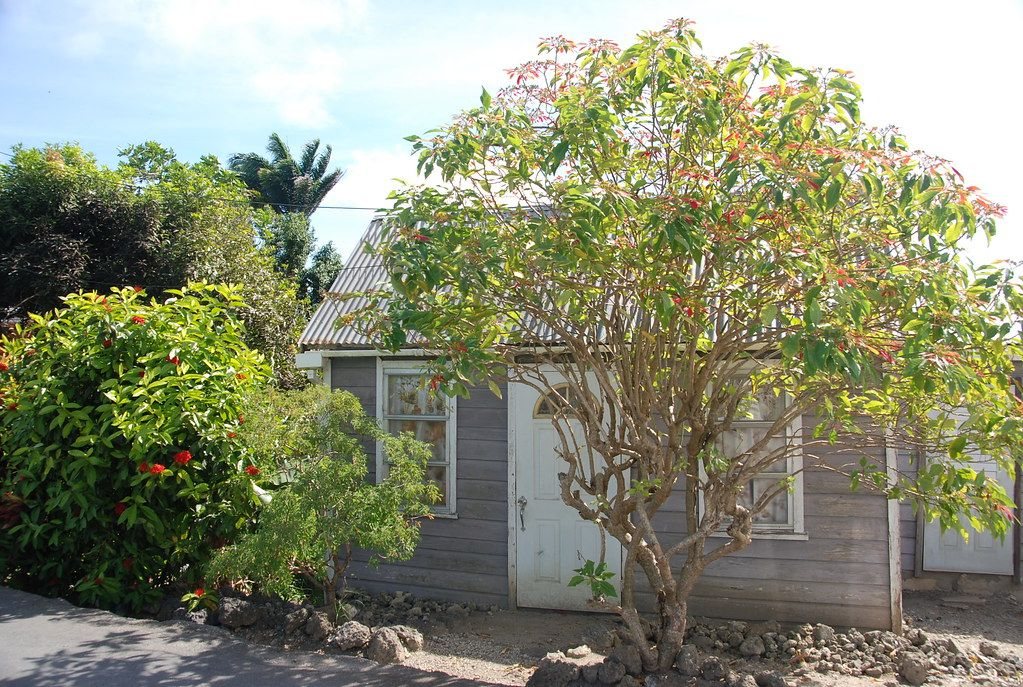
The chattel house is the building most people picture when they think of Barbados. It is a small, rectangular wooden house with a steep gabled roof, a central door and a window on each side, set up on blocks of stone rather than on a fixed foundation.
Its history begins after emancipation in 1838. Many formerly enslaved workers stayed on or near the estates but did not own the land they lived on. They rented house spots, and a landlord could end the arrangement at short notice. So people built homes that could be taken apart, loaded onto a cart and put up again on another plot. The house was a chattel, movable property that belonged to the family even when the ground did not.
Another noteSt John, the parish on the cliffBecause it had to move, the basic house was modest: often a single unit divided into two rooms. As a family's means grew, they added a second unit beside the first or a shed-roofed extension at the back, so many chattel houses today are joined pairs or rows with a small kitchen behind.
Gingerbread, jalousies and colour
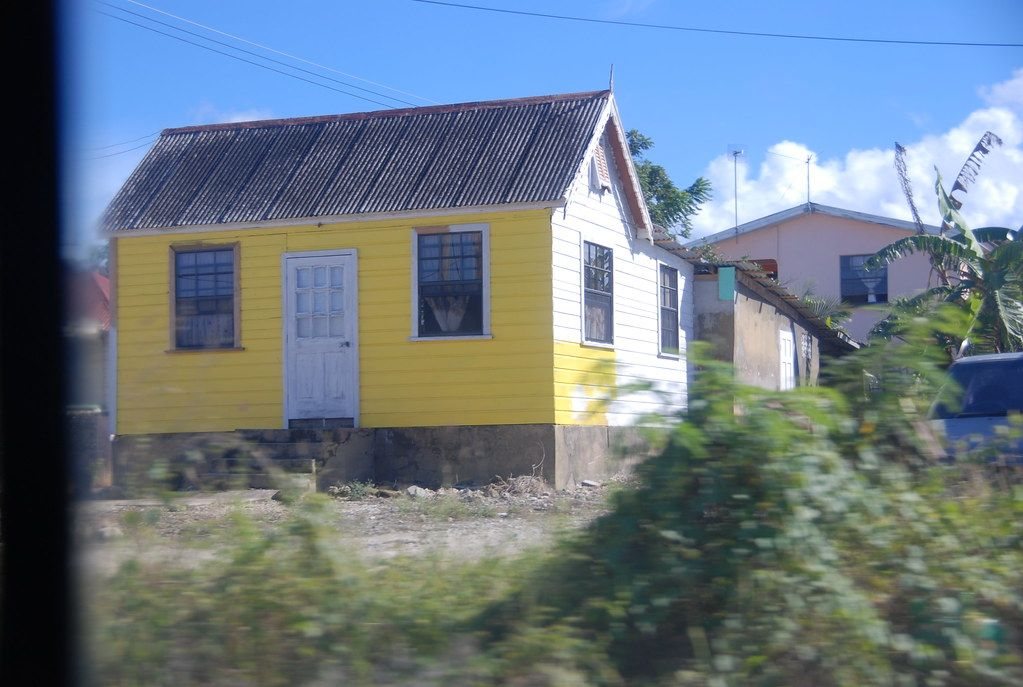
Chattel houses and larger island homes share a set of details that suit the climate. Jalousie windows, with angled wooden slats, let breeze in and keep sun and rain out. Fretwork trim along the eaves and gables, often called gingerbread, adds decoration and can help air move. Steep roofs, once shingle and now often corrugated metal, shed heavy rain fast and were less likely to lift in strong winds.
Colour is personal. You see houses in pale blues and greens, bright yellow, pink or plain weathered wood. Many have been rebuilt in concrete blocks around the same simple plan, and some old chattel houses survive as shops or storerooms.
Where to look
You do not need a special trip. Chattel houses line village roads in every parish, from the edge of Bridgetown to the hills above the east coast. The quiet roads of St John and the uplands of the centre are good places to drive slowly and notice them. A few heritage sites keep restored chattel houses for visitors.
- Barbados drives on the left; pull fully off the road before stopping.
- Look for coral in the old walls and gateposts.
- Remember that the house you are admiring is someone's home.
Once you start noticing the stone and the small wooden houses, you see how the island's history is written into its everyday buildings.